Alex Swartsel on Navigating the Future: How AI Will Transform Jobs and Skills

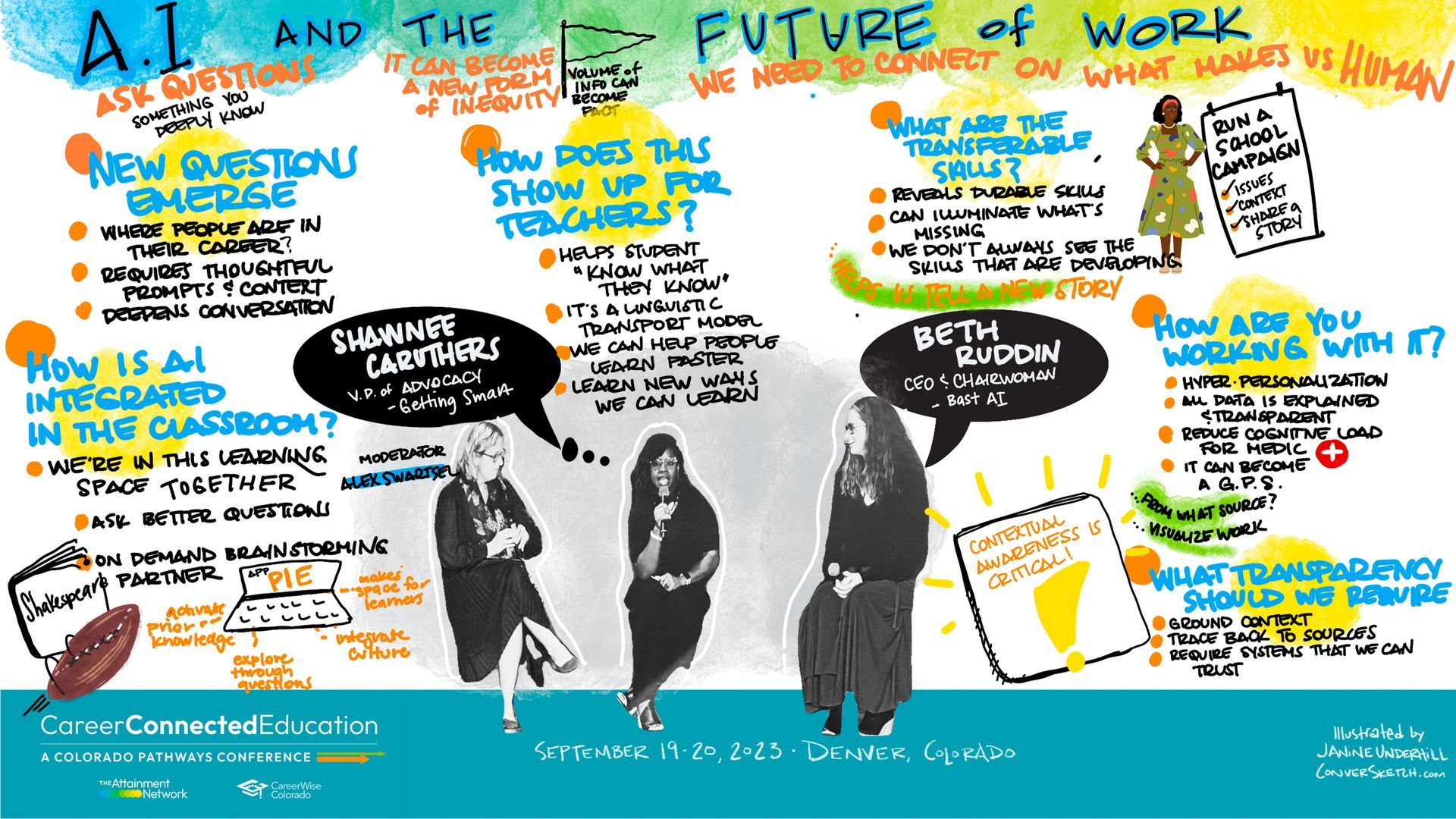
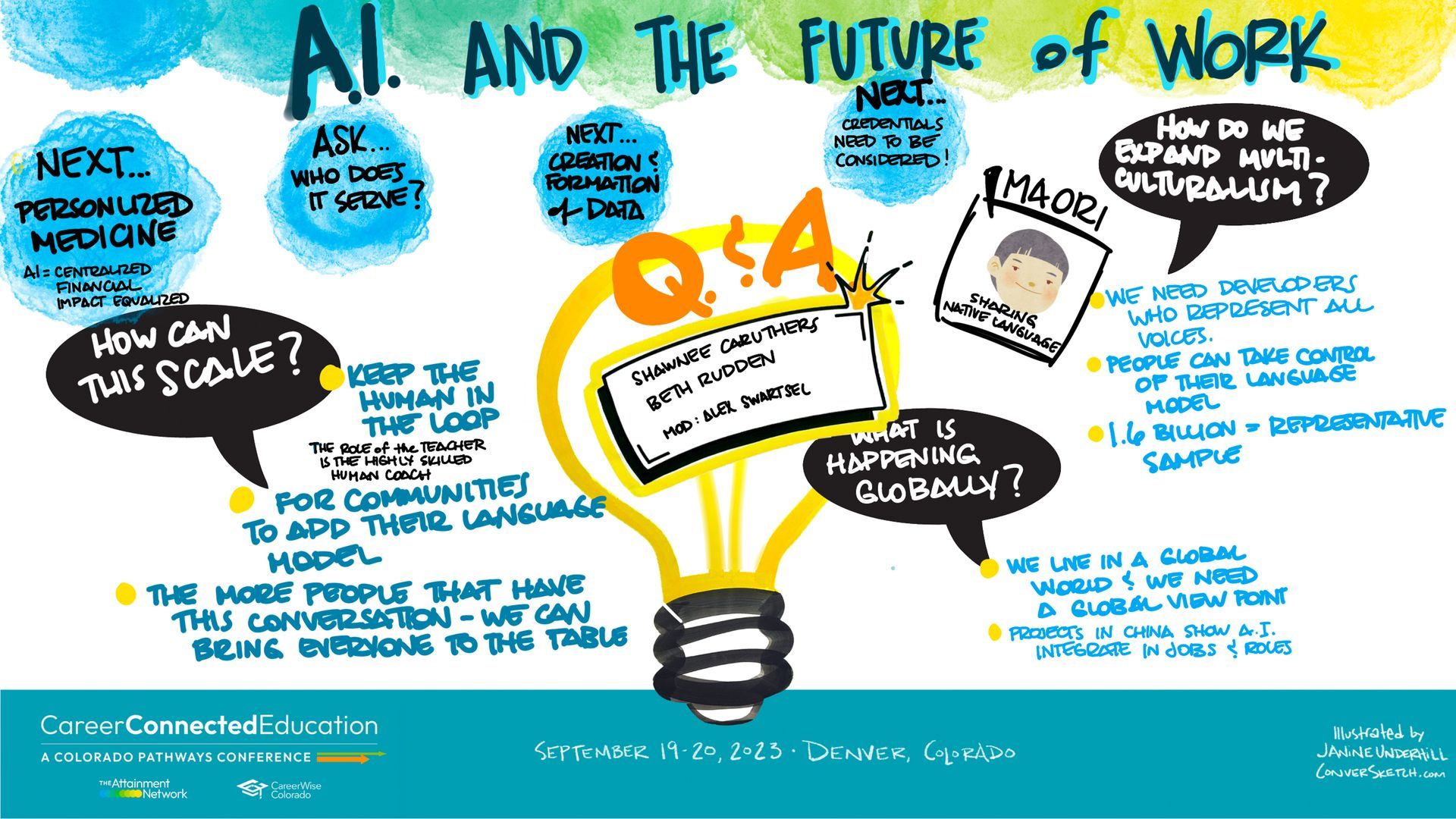
Alex Swartsel, Managing Director of Insights at Jobs for the Future (JFF) Labs kicked off our annual pathways conference with a talk about the major impact of Artificial Intelligence (AI) and helped us envision the future and its possibilities. In a rapidly evolving world of AI, the impact on jobs and skills is a burning question. As we embrace AI and its potential to connect learners and workers to quality jobs and opportunities, it’s crucial to understand how it will reshape our workforce. In her keynote Alex explored three early ideas and three big questions surrounding the intersection of AI, jobs, and skills.
- It’s Complicated: The rise of generative AI and other advanced technologies has sparked headlines that often fall into two extreme camps – AI will save us all, or it will lead to mass job extinction. However, the reality is more nuanced. AI’s impact on the job market is complex, and it’s essential to move beyond this binary narrative. We, as agents in this AI-driven world, must focus on understanding how to shape the future collaboratively.
- Reshaping More Than Replacing: Early research indicates that AI’s most significant impact on jobs and skills will be in reshaping rather than replacing them. Around 80% of the U.S. workforce may see 10% or more of their tasks influenced by AI, particularly generative AI. McKinsey’s findings suggest that up to 30% of work hours could be automated due to AI. Importantly, this impact is measured in terms of skills and tasks, not just entire job roles. The key question is how AI can complement human work and enhance our capabilities.
- Making Choices for Our Future: As AI continues to advance, society faces critical choices about how we adopt and integrate this technology into our lives and workplaces. These choices will shape the nature of work, redefine job roles, and determine which tasks remain exclusively human. We stand at a crossroads, with the opportunity to proactively shape the future of work rather than merely reacting to it.
Big Questions for the Future:
- What Do We Need to Learn and Teach? As AI becomes increasingly integrated into our lives, foundational AI literacy is essential for learners, organizations, and leaders. Understanding the trajectory of AI development and its potential is vital.
- How Can We Harness Learner Innovation? Empowering learners to explore and experiment with AI technology can lead to innovative solutions and novel applications. It’s crucial to involve learners in the process of shaping AI’s role in education and work.
- Reshaping the Ecosystem: Leveraging proven strategies like work-based learning, apprenticeships, and skills-first hiring can help ensure that learners and workers benefit from AI advancements. Additionally, the AI job market must be equitable and accessible to all, addressing diversity and inclusion.
- Building the Right Technology Infrastructure: Organizations need to stay ahead in the AI race by adopting the right technology infrastructure and data analytics. This ensures they remain competitive and can harness AI effectively.
- Valuing Human Work: As AI takes over routine tasks, the unique value of human work becomes more apparent. Jobs that rely on interpersonal skills and human-to-human interaction should be valued and compensated accordingly. This shift has the potential to create economic mobility and empowerment for marginalized populations.
AI’s impact on jobs and skills is multifaceted, requiring a nuanced understanding of its potential. By actively shaping our future relationship with AI, we can unlock boundless opportunities and create a world where quality jobs and equitable opportunities are accessible to all. The path forward involves careful consideration, innovation, and a commitment to valuing the unique capabilities of humans in the AI-driven landscape.
RECENT ARTICLES